Medical doctor
Completed six years of medical education at Ege University Faculty of Medicine and received the title of medical doctor on 2 August 1982 (Diploma No. 3212); began specialist training in pediatric surgery at the same faculty.
Pediatric Surgery and Pediatric Urology Specialist
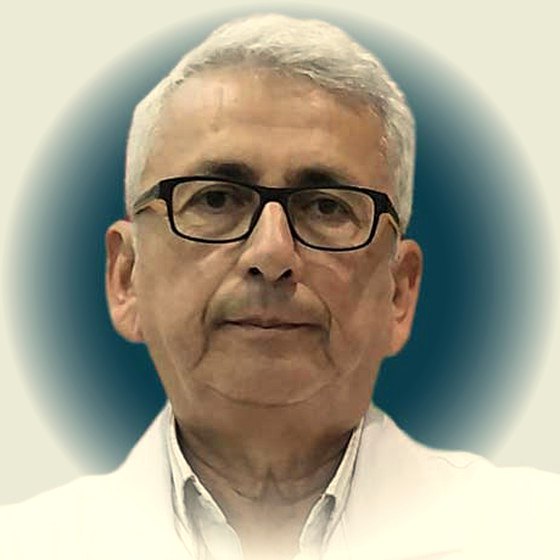
Prof. Dr. Ali Avanoğlu has more than forty years in medical practice and over thirty-two years of specialist experience in pediatric surgery; since 1994 he has focused his work exclusively on pediatric urology. At Ege University Faculty of Medicine he was awarded the title of associate professor in 1996 and full professor in 2002, and at the same faculty he served as chair of the Department of Pediatric Surgery and the Division of Pediatric Urology.
During his specialist training he spent a year in the United States (Children's Hospital of Pittsburgh) as a research fellow; in Sweden, at the University of Gothenburg, he completed a course on voiding dysfunction in children, and subsequently the certifying examination of the European Board of Paediatric Surgery (within UEMS). In 2006, in Leuven (Belgium), he received FEAPU (Fellow of the European Academy of Paediatric Urology), a Europe-wide added-qualification title in pediatric urology.
To date he has performed approximately 3,000 hypospadias repairs and more than 1,000 vesicoureteral reflux operations; he carries out his surgeries together with Doç. Dr. Yaşar Issı, with every case decided by the two specialists' joint assessment.
Completed six years of medical education at Ege University Faculty of Medicine and received the title of medical doctor on 2 August 1982 (Diploma No. 3212); began specialist training in pediatric surgery at the same faculty.
During his specialist training, spent one year in the United States working as a Research Fellow in Pediatric Surgery at the Children's Hospital of Pittsburgh in Pennsylvania, gaining research experience in pediatric surgery.
Passed the mandatory associate-professorship examination of the Interuniversity Board and received the title of university associate professor in pediatric surgery; in Turkey this title is a required stage of academic career before a full professorship.
Attended the 'Bladder Dysfunction and Urotherapy in Children' course in Gothenburg, jointly organized by the University of Gothenburg and the International Children's Continence Society, and completed its examination; the course focuses on voiding dysfunction and urological therapy in children.
Completed the joint European examination of the European Board of Paediatric Surgery, within the Union Européenne des Médecins Spécialistes (UEMS) — separate from and optional alongside the national specialist exam — and received its certificate.
Passed the peer-review assessment run by the Turkish Board of Pediatric Surgery — separate from the Ministry of Health specialist certificate — and received the competency certificate (No. 053).
Received the title and authority of professor in the Department of Pediatric Surgery at Ege University Faculty of Medicine, by decision of the university's governing board.
In Leuven (Belgium), completed a separate Europe-wide added-qualification examination in pediatric urology and received the title of Fellow of the European Academy of Paediatric Urology (FEAPU) from the Joint Committee of Paediatric Urology; the JCPU is a joint board operating within the European Society for Paediatric Urology (ESPU).
Following an assessment of his work by the Ministry of Health, received the official specialist title in pediatric urology — later recognized in Turkey as a separate specialty (Decision No. 141).
Ali Avanoğlu and Yaşar Issı work together on your child's surgery from start to finish.
Which technique to use, and any unexpected situation that arises during surgery, is decided by the two specialists' joint assessment.

Because four hands work at the same time, surgery and anesthesia time is shortened.
Conditions occurring alongside the main one (such as an undescended testicle or inguinal hernia) are planned for the same session whenever possible.
Because the same team stays with your child, follow-up that began in childhood continues into adolescence and adulthood.
Ali Avanoğlu — institutions where he has worked

A congenital difference in which the urinary opening forms lower down: from diagnosis to repair, recovery and follow-up.
Go to treatment page
When a testicle has not descended into the scrotum: from retractile to intra-abdominal, timing, orchiopexy and the long term.
Go to treatment page
Urine flowing back from the bladder toward the kidney: infection, grades, monitoring, injection, surgery and the long term.
Go to treatment page
A blockage where the kidney drains: the difference from hydronephrosis, MAG3, monitoring vs. surgery, pyeloplasty and recovery.
Go to treatment pageBelow each certificate you'll find what the issuing institution is and what the title covers.
The Joint Committee of Paediatric Urology (JCPU) — Leuven, Belgium
The JCPU is the joint board that assesses the Europe-wide added-qualification (subspecialty) examination in pediatric urology. The certificate describes this title as “a certificate of added qualification in Paediatric Urology”; it shows that, beyond a general pediatric surgery/urology specialty, a separate European examination focused solely on pediatric urology was successfully completed. It is not mandatory — only physicians who choose to do so sit this additional exam, which is why relatively few hold it.
European Board of Paediatric Surgery (EBPS), within UEMS (Union Européenne des Médecins Spécialistes)
UEMS (Union Européenne des Médecins Spécialistes) is the umbrella organization that brings together medical specialty associations across European countries, aiming to harmonize specialist-training standards Europe-wide. Its European Board of Paediatric Surgery runs the joint European examination in pediatric surgery; this certificate shows that examination was successfully completed (Registration No. 301). It is a separate, optional assessment alongside the national specialist exam.
Children's Hospital of Pittsburgh — Pittsburgh, Pennsylvania, USA
The Children's Hospital of Pittsburgh, in Pennsylvania, USA, provides clinical and research training in pediatric surgery. Prof. Dr. Ali Avanoğlu worked there as a research fellow for one year.
Department of Pediatrics, University of Gothenburg (Sweden), in collaboration with the International Children's Continence Society (ICCS)
The International Children's Continence Society (ICCS) is the scientific society that sets international diagnostic and terminology standards for urinary/fecal incontinence and voiding dysfunction in children. The examination of this course, held jointly with the University of Gothenburg, was successfully completed.
Ege University Faculty of Medicine
The Faculty of Medicine of Ege University, founded in 1955; after six years of theoretical and practical training it awards its graduates the diploma of medical doctor.
Ministry of Health
The Ministry of Health is the institution in Turkey that grants a physician the official authorization to examine and treat patients under the title of “specialist” in a given field; it issues the Specialist Certificate after residency training and examinations are completed.
Interuniversity Board (ÜAK)
The official board that, under Law No. 2547 on Higher Education, coordinates academic matters among Turkey's universities; the title of associate professor is granted after this board evaluates the candidate's scientific publications and work, and it is a required stage of academic career before a full professorship.
Turkish Board of Pediatric Surgery
A competency assessment run within the pediatric surgery community itself, separate from the specialist certificate issued by the Ministry of Health; it shows that the specialist training in the field was confirmed through peer review. It is not mandatory — only physicians who apply undergo this additional assessment.
Ege University — Department of Pediatric Surgery
Under Law No. 2547 on Higher Education, the title of professor — the next academic rank after associate professor — is granted by decision of the relevant university's governing board.
Ministry of Health
Pediatric urology was later recognized in Turkey as a separate specialty; this certificate shows the official specialist title granted after the Ministry of Health evaluated the work done in the field. Because it requires subspecialty training beyond general pediatric surgery, relatively few physicians hold this title.
There are two ways. If you'd like the doctor to already know your situation before replying, start with the short assessment; if your question is brief, write to us directly. Both reach the same team.
Editor's note: Age and a short sentence are enough; you don't need to use medical terms. Please don't send photos — the doctor will request them through a secure channel if needed. What you write is only sent when you submit it; this page does not store anything.