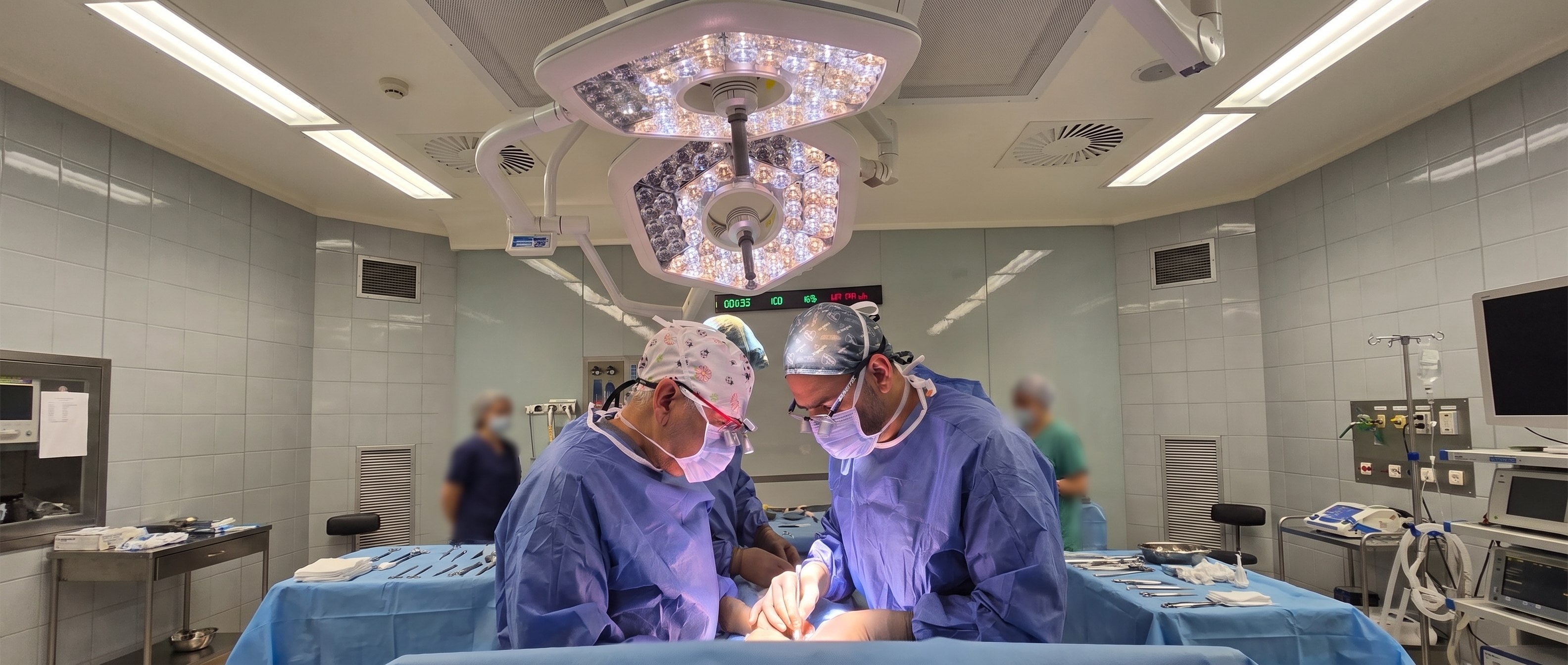
Short answer: there is no upper age limit. Whatever age the diagnosis is made, orchiopexy (bringing the testicle down into the scrotum and fixing it in place) is planned. What changes as a child gets older isn’t the timing of the surgery — it’s the goal of the surgery.
This is a planned (elective) surgery, not an emergency. Rearranging the calendar by a few weeks isn’t a problem; putting it off for months, however, isn’t advised, because time works against the testicular tissue.
Surgery is planned no matter what age the diagnosis is madeOrchiopexy is recommended between ages 3 and 10 as well; the goal is to fix the testicle permanently in the scrotum, provide the right environment for its development, and make it easy to examine. This is a planned surgery — not an emergency — so you can arrange your schedule comfortably.
Approach to undescended testicle by age
| Age | What’s done |
|---|
| Ages 0-2 | The ideal window is 6-18 months; even at a diagnosis made at age 2, there’s no waiting — surgery is planned. |
| Ages 3-5 | There’s no place for waiting and watching; planned orchiopexy is done in the preschool years. |
| Ages 6-10 | A large share of cases are ascending testicles; surgery is recommended once diagnosed, and the tissue is usually well preserved. |
| Age 11 and beyond | When planning undescended testicle surgery at age 12, the other testicle’s volume and, when needed, a hormone profile are added to the evaluation; in most cases the testicle is preserved. |
Ages 3-5: surgery in the preschool years
For children diagnosed with an undescended testicle at age 3 or 4, surgery is scheduled at the first suitable date after diagnosis. Undescended testicle surgery at age 5 follows the same rule; the preschool years are an easy stretch for both scheduling and recovery. At this age, the goal is to limit further loss of the precursor cells before it progresses any further.
Ages 6-10: surgery in the school years
When undescended testicle surgery comes up at school age — say, at 7, 9, or 10 — the underlying picture is most often an ascending testicle. An ascending testicle is most commonly noticed between ages 4 and 10. Because the testicle spent its infancy in the scrotum, the tissue is usually well preserved, and surgical outcomes tend to be better than for testicles that were high-positioned from birth.
School age is a time when children become more aware of their bodies; your child may notice the difference in the scrotum too. That’s why, before surgery, the process is also explained to the child directly, in language suited to their age.
Age 11 and beyond: adolescence and adulthood
In children aged 10-12 and in adolescents, new items are added to the evaluation: the volume of the other testicle, a hormone profile when needed, and tumor markers if the testicle is suspected to be inside the abdomen. Undescended testicle surgery at age 12 is not technically different; the main benefit is preserving hormone-producing tissue and making the testicle examinable. For a testicle that is markedly shrunken and non-functional, the options — bringing it down or removing it — are discussed together with the teenager and their family. In most cases of a testicle left untreated until adolescence, the preference is to preserve it.
When an undescended testicle in an adult is noticed, say at age 30, the evaluation is handled in adult urology. The decision is individualized: the testicle’s function, the condition of the other testicle, and cancer risk are all weighed together. We also carry out adult urology evaluations.