Balanitis in Babies: Redness and Swelling at the Tip of the Penis
Balanitis is inflammation of the head of the penis and the foreskin, marked by redness and swelling; it's common in babies and preschool-age children. Most cases settle within a few days with gentle care.
If you've noticed redness, swelling, and tenderness at the tip of your baby's penis, this is usually called balanitis: inflammation of the head of the penis (the glans). The word "inflammation" here means a reaction that comes with redness, swelling, and tenderness — on its own it doesn't mean a serious infection.
A small share of uncircumcised boys go through this at least once in childhood, and it's most common in the preschool years. In most children the redness fades within a few days and leaves nothing behind.
Below you'll find balanitis's symptoms and causes, how many days it typically takes to clear, what's safe to do at home, and which signs mean you should see a doctor the same day.
01
What is balanitis? What does redness at the tip of the penis mean?
Balanitis is inflammation of the head of the penis, marked by redness, swelling, and tenderness. The moist environment under the foreskin, friction, and irritating products all make this easier to happen — which is why it's more common in babies and preschool-age children.
Parents usually describe it as "the tip of his penis got red and swollen." In most children this is a temporary irritation or a surface-level inflammation, not a lasting illness.
Balanitis, posthitis, balanoposthitis — what's the difference
When only the head of the penis is affected it's called balanitis; when only the foreskin (prepuce) is affected it's called posthitis, meaning inflammation of the foreskin. When both are affected together, it's called balanoposthitis.
In children these two pictures are usually intertwined, and the distinction may not be clear on examination. The good news is that the approach is largely the same in all three cases — meaning which name the condition carries doesn't meaningfully change the treatment.
How does this look different in circumcised and uncircumcised children?
A child without a foreskin can't develop posthitis, since the closed, moist space under the skin no longer exists. That said, contact with diapers, friction, or soap can still cause redness at the head of the penis in circumcised children too. This redness is usually more superficial and due to irritation.
02
Symptoms: which signs point to balanitis?
The signs of balanitis are visible from the outside: what changes is the appearance of the penis. This visible change is the first clue that separates balanitis from conditions of the urinary tract itself.
What you see → what it means → what to do
What you see
What it means
What to do
There's redness, swelling, and discharge at the head of the penis and the foreskin
There's redness and swelling, but the child is urinating normally.
Balanitis (inflammation at the tip of the penis) is likely; that's the subject of this article.
The urine stream has become as thin as a pencil tip, the child strains, and urinating takes longer; there's no redness
The problem isn't in appearance, it's in the urine stream.
The retracted skin can't be brought back forward; there's a tight ring behind the head of the penis, with rapidly increasing swelling and darkening color
The foreskin has become trapped behind the head of the penis (paraphimosis); this is an emergency.
See a doctor the same day; don't try to fix it at home.
An appearance present from birth: the urinary opening is set back, the foreskin is hooded
This isn't inflammation, it's a difference present from birth.
Redness, swelling, and tightness at the head of the penis and the foreskin, along with tenderness to touch, are the typical signs. In some children these come with a bad smell, yellowish discharge, and itching.
In baby boys, this usually shows up through behavior rather than words: crying during diaper changes, fussing when the area is touched. When you notice redness at the tip of a boy's penis, it's worth thinking first about the role of the diaper, soap, and wet wipes.
Burning, discomfort, and holding in urine while urinating
A child may describe stinging while urinating, and may put off going to the toilet because of it. Burning at the tip of the penis eases within a few days in most children once the area is kept dry and away from irritation.
The foreskin briefly puffing up like a balloon during urination is a common finding with an age-related tight (physiological) foreskin. This appearance is not on its own a sign of inflammation or a need for surgery. An evaluation is needed if the stream has become thin, comes out in a stop-start pattern, or the child is visibly straining to urinate.
03
Why does it happen? Common causes in babies and children
Balanitis isn't tied to a single cause; in most cases moisture, friction, and irritation occur together. In children who have a swab taken, Candida-type fungi are the most commonly grown, followed by bacteria such as streptococcus and staphylococcus.
In roughly a third of cases, no specific cause is found at all; the picture is due to irritation alone. That's why the "is it fungal or bacterial" distinction can't be made at home. Eczema (atopic dermatitis) and contact dermatitis can also cause redness and itching in the same area.
The foreskin opens up in its own time
Retractability increases on its own with age; by around age three the foreskin retracts easily in the large majority of children. There's no need to force it at any stage — waiting is the most practical way to look after this area.
The diaper area, moisture, and cleaning
A diaper left unchanged for a long time, contact of the skin with urine and stool, moisture, and friction all make this easier to happen; the moist environment sets the stage for bacteria to multiply. It shares the same setting as diaper rash.
A common misunderstanding is worth correcting here: excessive and harsh cleaning can cause it just as much as insufficient cleaning. Scented soap, bubble bath, wet wipes, cologne, and antiseptics irritate this thin skin. Plain warm water is enough in this area; cotton swabs and powder aren't needed.
Physiological adhesion and smegma — not an illness
At birth the foreskin is attached to the head of the penis and can't be retracted. Retractability increases on its own with age: by the end of the first year it's retractable in roughly half of children, and by around age three in the large majority. This isn't an illness — it's the normal course of development.
You may see white, pearl-like deposits between the foreskin and the head of the penis. This buildup is called smegma. Smegma is not inflammation or pus: it's painless, doesn't cause redness, and clears on its own as the skin separates. With inflammation, by contrast, the discharge is yellowish and foul-smelling, with redness around it.
The right approach with these adhesions is to wait for them to resolve on their own; separating them by force isn't required as a rule.
Forcing the foreskin back
Forcibly retracting a foreskin that hasn't separated yet can cause small tears, pain, and bleeding; scar tissue can develop while it heals and lead to a lasting narrowing. If the skin is left retracted, it can become trapped in what's called paraphimosis — a state where the retracted foreskin can't be brought back forward.
In short: don't force the foreskin; there's no need to try retracting it until it separates on its own.
04
How many days does balanitis take to clear? Does it go away on its own?
In mild, irritation-driven cases, the redness fades noticeably within a few days. In more pronounced cases, healing is usually complete within one to two weeks. This isn't a fixed timetable, but an expected range.
A significant share of mild cases settle with gentle care, without any medication. In a recent study covering more than four hundred sixty children, treatment failure was found to be very low regardless of which treatment was given. A repeat visit within thirty days was needed in only a very small number of children.
This shouldn't be read as "just wait and see." If there's no improvement within two to three days despite gentle care, if the swelling is increasing, or if discharge or fever appears, a doctor's evaluation is needed.
Most balanitis settles with gentle care
In mild cases, washing with plain warm water, keeping the area dry, and not forcing anything are usually enough; the redness noticeably eases within a few days. If you don't see improvement within two to three days, an examination is all it takes.
does balanitis go away on its own
05
Treatment: home care, creams, and medication
Treatment has two steps. The first is gentle care, which can safely be applied in every child. The second is a topical treatment that the doctor plans, in cases where it's needed, based on the examination findings.
Steps for home care
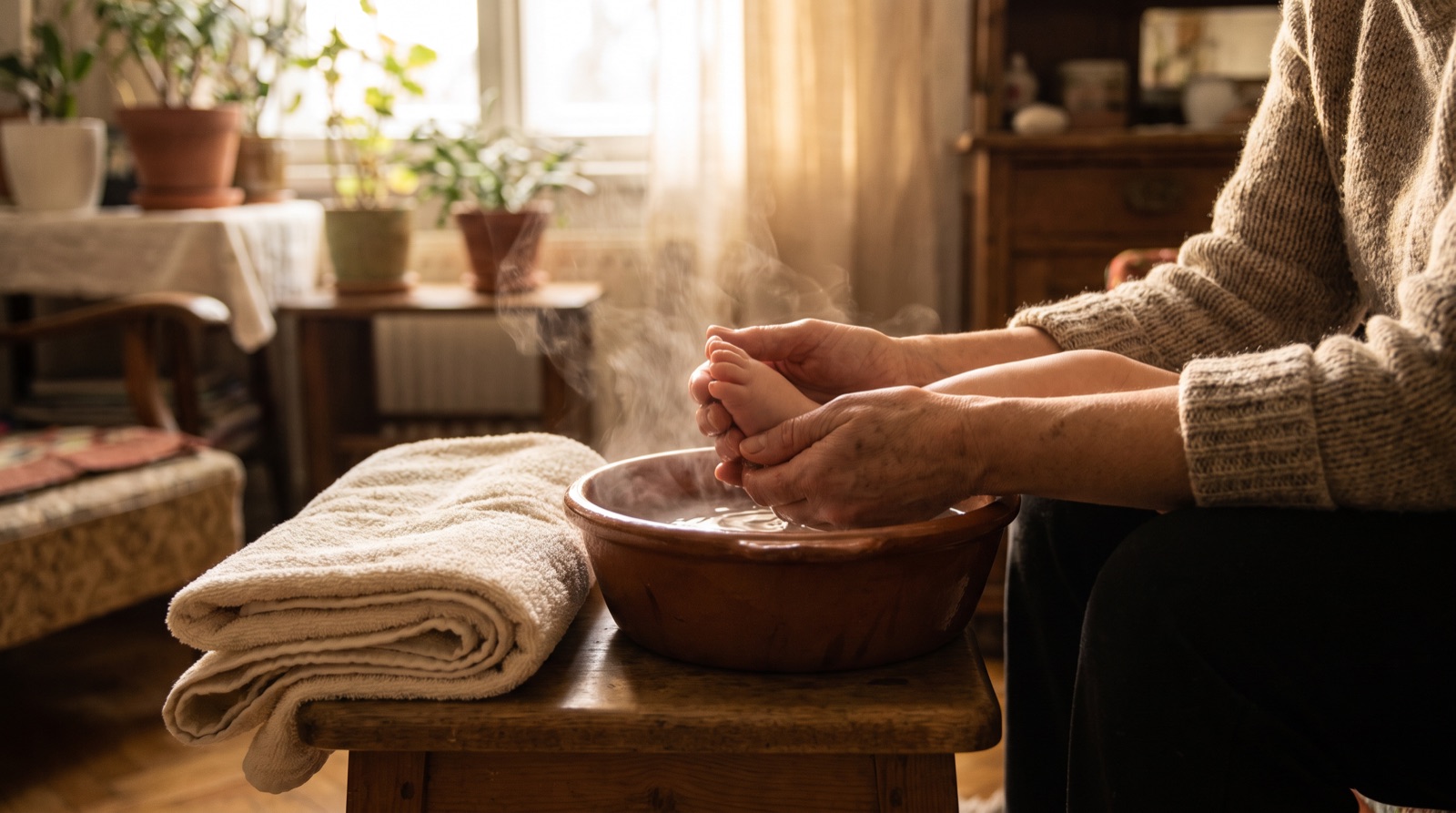
Wash gently a few times a day with plain warm water only; don't use soap, shampoo, bubble bath, or wet wipes. A short, warm sitz bath can be soothing for a baby.
After washing, pat the area dry without pressing, and keep it dry. Change the diaper often; let the area air out without a diaper a few times during the day. Don't use powder.
You can gently retract a foreskin that has already separated on its own, only as far as the child is comfortable with, and rinse it; remember to bring the skin back forward after rinsing. Watch that your child is able to urinate; if they can, and the picture is mild, these steps are usually enough.
Don't apply anything to the area that your doctor hasn't recommended. There's no reliable evidence that remedies like St. John's wort oil, olive oil, or yogurt help; some may even increase irritation.
When do creams and antibiotics come into the picture?
If the redness is pronounced, if there's discharge, or if gentle care isn't producing improvement, the doctor may plan a topical (applied) treatment based on the examination findings. There are options aimed at irritation, fungus, and bacteria; the examination determines which is appropriate.
That's why there's no single answer to "which cream is used for balanitis?": the picture can be caused by fungus, bacteria, or pure irritation alike. A wrongly chosen cream can delay healing and increase irritation.
For this reason, treatment shouldn't be started with leftover medication at home or a cream bought at the pharmacy. The prescription is the decision of the doctor who examines the child; the plan after the exam is short and simple in most children. In cases that don't respond to topical treatment, the doctor may plan an oral medication.
06
When should you see a doctor?
Most cases of balanitis follow a calm course; even so, the situations that need same-day evaluation are clear and easy to recognize. If any of the signs below is present, don't wait for a scheduled appointment.
See a doctor the same day if the child can't urinate at all, or is visibly straining to urinate.
Don't wait if the retracted foreskin can't be brought forward again, and there's a tight ring behind the head of the penis with rapidly increasing swelling and darkening color. This is called paraphimosis. Because the tight ring blocks blood and lymph return, it's a medical emergency; only a doctor should correct it — don't try it at home.
See a doctor the same day if the redness spreads beyond the penis to the groin or lower abdomen, or if there's marked pain and firmness to the touch.
In a baby under three months old, a fever of 38 °C (100.4 °F) or higher needs same-day evaluation regardless of the cause. In an older child, a fever added to the picture also calls for an exam.
Don't wait if you notice darkening or bruising at the head of the penis. This can point to a constricting ring, or rarely, to a hair strand wrapped around the penis.
See a doctor the same day if there's a rapidly growing, localized swelling, an open wound on the skin, or bleeding.
Prompt care makes things easier
These signs are uncommon; when they do occur, seeking care early usually means the problem is resolved with a short procedure. The one sentence to remember is this: not being able to urinate, a foreskin that can't be brought forward, and darkening color all call for same-day evaluation.
07
Recurring balanitis: looking for an underlying cause
If the episodes keep recurring, the real question isn't "which cream," but "why does it keep coming back." Common causes are a tight foreskin, a persistent source of irritation, and, rarely, skin conditions. Finding the cause also shortens the treatment; the doctor may request further evaluation if needed.
The foreskin is sometimes tissue that needs to be preserved
Circumcision isn't performed in congenital differences such as hypospadias, a buried penis, and epispadias; the skin is used in the repair. If your child has such a condition, the plan for recurring balanitis is also built around that, and the options don't disappear.
Tight foreskin (phimosis)
The most common underlying ground for recurring balanitis is a tight foreskin (phimosis). A scar-free, congenital narrowing opens up with age; a narrowing that has turned into a white, hardened ring doesn't resolve on its own. The exam makes the distinction; the forms this narrowing takes, ointment treatment, and the decision about circumcision are the subject of a separate article.
If there's a white, shiny, hardened ring at the tip of the skin and the episodes keep recurring, a skin condition called lichen sclerosus (BXO) comes to mind. It's rare in children; recognizing it early matters because it changes the treatment plan.
When does circumcision come into the picture?
Circumcision markedly reduces the chance of recurrence, since it removes the moist environment and buildup under the skin. That said, irritation-driven redness at the head of the penis can still occur in a circumcised child.
Guidelines are clear about the situations where circumcision becomes medically relevant: lichen sclerosus; recurrent balanoposthitis; a symptomatic, pathological narrowing that doesn't respond to topical treatment; and recurrent urinary tract infection in a child with a urinary-system anomaly. The decision is made not on a single episode, but based on how often the episodes occur, how long they last, and the examination findings.
One point deserves special mention: children with hypospadias, a buried penis, epispadias, or a congenital curvature of the penis are not circumcised, because the foreskin is tissue that may be needed later for repair. In these children, the decision about circumcision is made together with the repair plan.
Not every redness at the tip of the penis is balanitis; a few conditions present with similar complaints, and their distinguishing signs are fairly clear.
If the urine stream is as thin as a pencil tip, the child strains, and urinating takes longer, but there's no redness, the problem isn't in appearance but in the stream. This points to narrowing of the urinary opening (meatal stenosis); narrowing at the tip of the penis in baby boys is usually recognized this way.
If there's fever, foul-smelling or cloudy urine, fussiness, and vomiting while the outward appearance is normal, the problem isn't on the outside but in the urine itself. These signs suggest a urinary tract infection in children. Balanitis and urinary tract infection are separate conditions, and in most children balanitis doesn't turn into a urinary tract infection; fever and urine findings are what tell them apart.
Balanitis is diagnosed on examination; not every child needs testing. A urine test may be requested if there's fever, if the urine odor is noticeable, or if episodes keep recurring. One detail matters here: an urinalysis and culture can lose its reliability depending on how it's collected. A bag sample collected from a child in diapers isn't reliable for culture.
In a circumcised child, the skin may reattach to the head of the penis, or a skin bridge may appear at the tip. Neither of these is inflammation — they're a mechanical condition we call post-circumcision adhesion. If the redness has also spread to the groin folds and buttocks, the picture isn't limited to the penis; this points to diaper rash.
The appearance where the urinary opening sits further back and the foreskin stands hooded is a difference present from birth; this is called the 'born circumcised' look.
The information in this article was prepared with reference to the EAU/ESPU pediatric urology guidelines, American Academy of Pediatrics (AAP) recommendations, and current review sources. Drug names and doses have deliberately not been given; that choice depends on the examination.
In short: redness and swelling at the tip of the penis settles in most children with gentle care using plain warm water and without forcing anything. If there's no improvement within two to three days, or if signs such as fever, inability to urinate, or a foreskin that can't be brought forward appear, an examination is needed. Two pediatric urologists on our team manage the process together, from diagnosis through follow-up.
You can see the steps to follow based on your child's findings by starting with the Roadmap, and book an appointment for an evaluation.
In mild, irritation-driven cases the redness noticeably eases within a few days; in more pronounced cases, healing usually takes one to two weeks. This isn't a fixed timetable, but an expected range. If there's no improvement within two to three days despite gentle care, an examination is needed.
Does balanitis go away on its own, or is medication always needed?
A significant share of mild cases settle with gentle care using plain warm water, without any medication. If the redness is pronounced, if there's discharge, or if there's no improvement within two to three days, the doctor may plan a topical treatment based on the examination findings. The decision about medication is made after the exam, not at home.
My baby has a white, inflammation-like buildup at the tip of his penis — what is it?
The white, pearl-like buildup seen between the foreskin and the head of the penis is most often smegma. Smegma forms from a buildup of dead cells and natural oils; it's not inflammation or pus. It's painless and doesn't cause redness around it; it clears on its own as the skin separates. No intervention is needed to remove it.
Which cream is used for balanitis?
There's no single answer, because the picture can be caused by fungus, bacteria, or pure irritation alike; in roughly a third of cases, no specific cause is found at all. There are options aimed at irritation, fungus, and bacteria, and the exam determines which is appropriate. Don't start a cream on your own from the pharmacy or from leftover medication at home.
What can I do at home, and what shouldn't I do?
Gentle washing with plain warm water a few times a day, patting dry without pressing, changing the diaper often, and letting the area air out without a diaper a few times a day are all safe. Don't use soap, bubble bath, wet wipes, cologne, antiseptics, or powder. Don't force the foreskin back; skin that has separated on its own can be brought back forward after rinsing.
How does burning at the tip of the penis go away?
Burning is usually due to irritation; keeping the area dry, dropping irritating products, and washing with warm water bring relief within a few days. Having the child drink plenty of fluids and not put off urinating also helps. If the burning continues, or fever is added, a doctor's evaluation is needed.
Why did my child's penis swell up?
The most common cause of penile swelling in children is balanitis or balanoposthitis, driven by moisture, friction, and irritation. Diaper contact, scented products, and forcing the foreskin all make this easier to happen. See a doctor the same day if the swelling is increasing rapidly, the color is darkening, or the child can't urinate.
I noticed bruising at the tip of the penis — is it an emergency?
Darkening color is a sign that shouldn't be left waiting. This appearance can be caused by the retracted foreskin failing to come back forward (paraphimosis), or rarely, by a hair strand wrapped around the area. Without trying to fix it at home, see a doctor the same day.
Is balanitis contagious?
Balanitis and balanoposthitis in children are typically not a contagious illness; they're mostly related to irritation, moisture, and the child's own skin flora. It isn't expected to pass to a sibling or be picked up from a pool or a toilet. There's no need to keep the child home from school or daycare.
Is some swelling after circumcision normal?
Some swelling in the first days after circumcision is an expected finding and it fades. If redness, discharge, and a bad smell are pronounced, or if the swelling is increasing, the picture is assessed for inflammation. The skin reattaching to the head of the penis, on the other hand, is not inflammation but a mechanical issue, and is assessed at the follow-up visit.
How is narrowing at the tip of the penis recognized in baby boys?
The sign of a narrowing is in the stream, not the appearance: the urine stream becomes as thin as a pencil tip, the child strains, and urinating takes longer; redness and discharge aren't prominent. In balanitis, by contrast, the signs are visible from the outside: redness, swelling, and discharge are what stand out. The exam makes the distinction.
When can the foreskin be retracted, and is forcing it harmful?
At birth the foreskin is attached to the head of the penis; it becomes retractable in roughly half of children by the end of the first year, and in the large majority by around age three. This is the normal course of development. Forcibly retracting skin that hasn't separated can cause tearing, pain, and scar tissue as it heals; for that reason, it shouldn't be forced.
If balanitis keeps recurring, is circumcision needed?
Circumcision markedly reduces the chance of recurrence because it removes the moist environment under the skin, and recurrent balanoposthitis is a recognized reason for circumcision in the guidelines. Even so, it isn't mandatory for every child; the decision is based on how often the episodes occur, how long they last, and the examination findings. In conditions such as hypospadias, a buried penis, and epispadias, circumcision is not performed.
How do you tell balanitis apart from a urinary tract infection?
In balanitis, the signs are visible from the outside: redness, swelling, discharge. In a urinary tract infection, fever, foul-smelling or cloudy urine, fussiness, and vomiting stand out, while the outward appearance is usually normal. They're separate conditions, and in most children balanitis doesn't turn into a urinary tract infection; the exam, and a urine test when needed, make the distinction.
Our surgeons · two specialists, one team
One operation,two surgeons
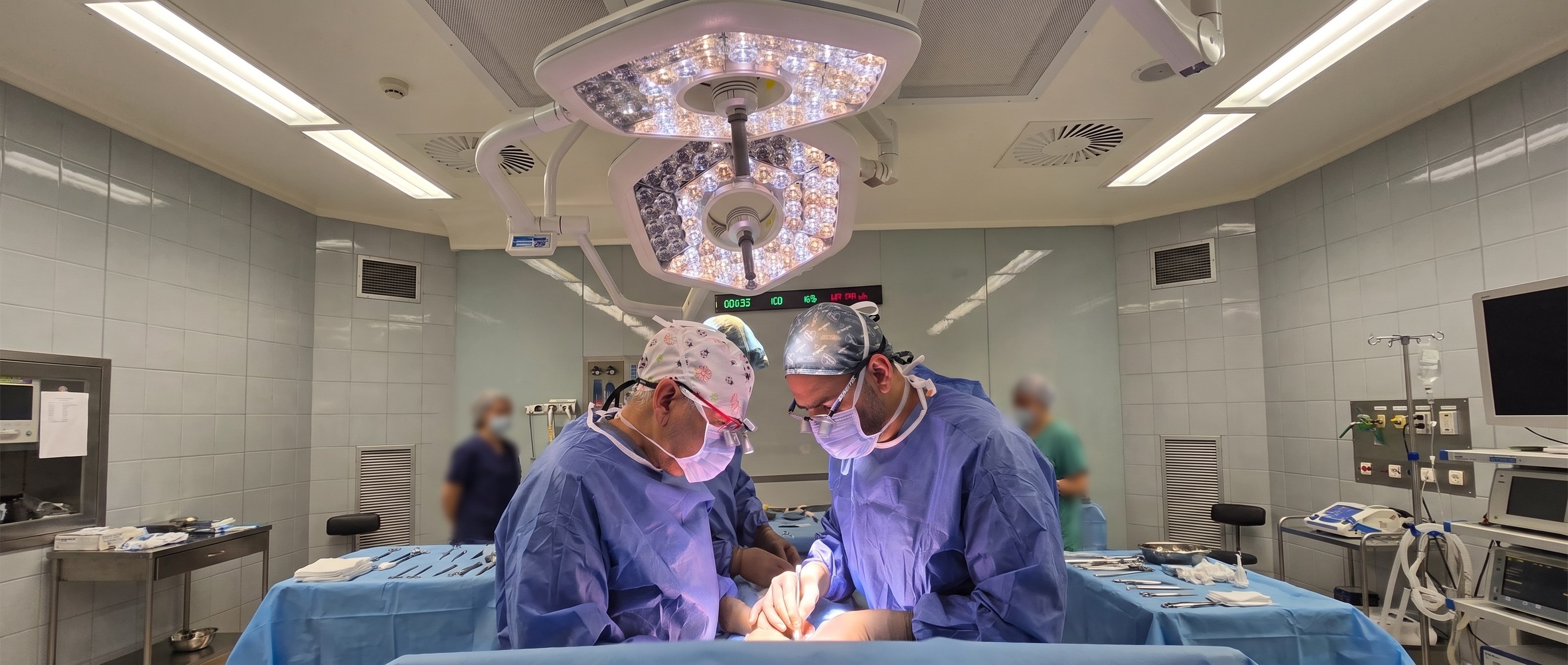
Two pediatric urology specialists work together on every operation: one performs the repair while the other assists, checks, and takes over when needed.
This built-in second opinion completes demanding operations with less risk.
Lower risk
A shared assessment and four-handed technique; a second experienced pair of eyes at the demanding steps.
Shorter surgery
Working in parallel shortens the time spent under anesthesia.
Less anesthesia
Infants and young children spend less time under anesthesia.
Prof. Dr. Ali Avanoğlu
Pediatric Surgeon and Pediatric Urologist
Over forty years in medicine, thirty-two of them as a pediatric surgeon; focused exclusively on pediatric urology since 1994. Associate professor in 1996 and full professor in 2002 at Ege University, where he chaired both the Department of Pediatric Surgery and the Division of Pediatric Urology. Roughly 3,000 hypospadias repairs and more than 1,000 operations for vesicoureteral reflux.
Graduate of Ege University Faculty of Medicine (2006); completed urology training at İzmir Atatürk Training and Research Hospital (2011) and a pediatric urology fellowship at Ondokuz May University (2016); associate professor since 2022. Has worked at Gaziantep Children's Hospital, İzmir Çiğli Training and Research Hospital, and Bakırçay University. More than 1,000 hypospadias repairs and a comparable number of stone operations; continues the same patients' follow-up from childhood through adolescence and adulthood, in the same team.
In every operation, it is not a surgeon and an assisting resident — it is two specialists who both know the procedure, working together.
We summarize the difference in four points.
Difference 01
Critical decisions are made together
Which technique to use, whether the repair will finish in one session, and how to respond to anything unexpected during surgery are decided by two specialists' shared assessment — never by one person alone.
Shared decision
2×
Two pediatric urology surgeons
Together, in the same team, every time
Difference 02
Shorter time under anesthesia
While one surgeon finishes a step, the other prepares the next; four hands work at once. In an infant or young child, every extra minute under anesthesia is a risk in its own right.
Two hands, at the same time
Difference 03Related conditions, same session
1×
One anesthesia: conditions found together (undescended testis, inguinal hernia, hydrocele, hydronephrosis) are planned into the same session.
Some issues only surface during adolescence or adulthood. Because the team includes both pediatric and adult urology, follow-up never breaks off between childhood and adulthood.
Pediatric urology
Adult urology
Same team, same record
Process · for patients travelling from abroad too
Travelling to Turkeyfor treatment?
Surgery takes place at İzmir Acıbadem Kent Hospital; our clinic is about 4–5 km from the hospital, with a range of accommodation options nearby.
The process runs in coordination between the clinic and the hospital, from your first consultation through to the completion of post-operative checks.
ClinicHospitalİzmir Acıbadem Kent Hospital · about 4–5 km.
01Clinic
Consultation and surgical planning
Patients are first assessed at our clinic; surgical planning is done here.
Avanoğlu–Issı Clinic
02Hospital
Pre-operative tests and anesthesia review
One day before surgery, you are referred to İzmir Acıbadem Kent Hospital for the required tests and anesthesia assessment.
One day before surgery
03Hospital
Surgery
The operation takes place the next day, as planned. In suitable cases, it is completed as day surgery.
İzmir Acıbadem Kent Hospital
04Clinic
Recovery after discharge
After the observation period, patients who meet discharge criteria continue recovering at home or at their accommodation. Dressing changes, wound checks, and catheter checks and removal continue at our clinic.
Avanoğlu–Issı Clinic
Frequently asked by families
What families travelling from abroad ask first
Short answers are below; write to us directly with any question about your trip.
Surgery takes place at İzmir Acıbadem Kent Hospital. Our clinic is about 4–5 km from the hospital, with a range of accommodation options nearby.
How does the process work, from consultation to surgery?
You are first assessed at our clinic, where the surgical plan is made. One day before surgery you are referred to the hospital for the required tests and anesthesia review; the operation itself takes place the following day, as planned.
Do we stay in hospital after surgery?
A significant share of our operations, when suitable, are completed as day surgery. Patients who meet discharge criteria continue recovering, after the observation period, in the more comfortable setting of your home or accommodation.
How are post-discharge checks handled?
Follow-up steps such as dressing changes, wound checks, and catheter checks and removal continue to take place at our clinic. That way, the entire process — from the first consultation through to the completion of follow-up — runs in coordination between the clinic and the hospital.
Contact us
With the hypospadias assessment that fits your situation would you like to reach the doctor?
There are two ways. If you'd like the doctor to already know your situation before replying, start with the short assessment; if your question is brief, write to us directly. Both reach the same team.
2I'll write directlyFill in the form; your message opens ready-made in WhatsApp (you can edit it before sending), or you can send it directly by email. This page's topic is added to the message automatically.
Editor's note: Age and a short sentence are enough; you don't need to use medical terms. Please don't send photos — the doctor will request them through a secure channel if needed. What you write is only sent when you submit it; this page does not store anything.