Skin Adhesions After Circumcision: How to Tell, Will They Resolve on Their Own?
In the weeks after circumcision, the skin sticking to the penis head is common; in most children it separates on its own. This post covers which appearance is expected, and which one calls for a doctor's visit.
If you've noticed the skin has stuck back to the penis head after circumcision, this is a common occurrence: this picture that appears during healing is called post-circumcision adhesion, or in medical terms, penile adhesion.
This post is for children who have already been circumcised. In uncircumcised children, the foreskin being stuck to the penis head is a completely different, congenital condition that resolves in its own time.
Most adhesions separate on their own as the child grows, without any procedure. There is only one form that does not open on its own: the skin bridge. Below you'll find how to tell the two apart, what's safe and what's harmful to do at home, and which findings mean you should see a doctor.
01
What is post-circumcision adhesion?
After circumcision, the skin of the penile shaft and the penis head (glans) heal side by side. If these two surfaces stay in contact throughout healing, a thin membrane forms between them and they stick to each other. This is commonly called foreskin adhesion as well.
Adhesion is usually painless and doesn't bother the child. Parents typically notice it as a change in appearance while changing a diaper or during bath time.
How often it occurs drops noticeably with age. Published series show some degree of adhesion in a large proportion of infants. In school-age children this picture becomes much rarer; no significant adhesion has been reported in children older than five.
Difference between adhesion and skin bridge
The two conditions may look similar from the outside, but they're distinct. In the common type of adhesion, the skin sticks to the penis head over a wide surface with a thin membrane; there's no gap between them, and this bond thins and separates over time.
In a skin bridge, however, a band forms between the shaft skin and the penis head that is covered with skin on top and leaves a thin gap underneath. This is the telltale sign that sets a bridge apart: a gap runs beneath the band. A skin bridge is healed scar tissue, so it does not open up with waiting or with cream.
You don't need to make this distinction yourself by eye. It's identified within seconds during an exam, and this distinction also determines the treatment decision; it's enough to mention it at the check-up.
02
What the penis looks like after circumcision: how do you tell if it's adhesion?
In the first weeks after circumcision, the appearance changes quickly; some of this change is expected healing, and some is a sign of adhesion. The most practical way to tell them apart comes down to a single question: is it the appearance that's changing, or the child's urination?
Changes in appearance are usually part of healing
If there's no pain, redness, or urination problem, what you're seeing is most likely mechanical adhesion; this is not an emergency and it improves over time in most children. It's enough to show it at the first check-up.
What you see → what it means → what to do
What you see
What it means
What to do
Skin covers part of the penis head, no pain
The skin is stuck to the penis head over a wide surface; this is the common type of adhesion.
It's assessed at the check-up; in most children it's simply monitored.
There's a band between the skin and the penis head with a gap running underneath
Skin bridge; this is healed scar tissue.
It doesn't open on its own; a doctor needs to assess it.
There's a yellow-white buildup under the adhesion, no redness
A natural white buildup collected under the skin (smegma); it's not infection.
Gentle care is enough; don't squeeze or scrape it.
Redness, swelling, pain, and discharge together
Suggests infection of the tip of the penis (balanitis).
The child can't urinate, bleeding won't stop, swelling is rapidly increasing and darkening in color
This is not expected; it shouldn't wait.
See a doctor the same day.
First two weeks: swelling, crusting, and the expected appearance
In the first days, swelling, a purplish color change, and a thin yellowish layer on the penis head are the expected appearance of healing; this layer is not infection and should not be scraped off. During this period, the border between the skin edge and the penis head looking blurred does not by itself mean adhesion.
We'll cover the details of daily post-circumcision care — diaper changes, bathing, crusting — in a separate post later. Here we're only discussing adhesion.
Findings that suggest adhesion
Once swelling has gone down, three findings suggest adhesion: the skin folds back over the penis head and stays there, part of the circumcision line becomes invisible, and when the skin is gently slid back, it immediately returns to the same spot.
Underneath the adhesion you may see a yellow-white, paste-like buildup. This buildup is called smegma; it's a natural accumulation. It is not infection, and it doesn't need to be squeezed out or scraped off; it clears on its own as the adhesion separates.
If what's changing isn't the appearance but the child's urination, the condition to think of isn't adhesion. A thinning stream, spraying upward, or the child straining points to a narrowed urinary opening (meatal stenosis).
post-circumcision adhesion appearance
03
Why does it happen? Conditions that set the stage for adhesion in babies
Adhesion is not a sign that something went wrong; it happens when two healing surfaces keep touching each other. This is also why post-circumcision adhesion is common in babies: the diaper period keeps this contact constant.
The practical answer to "why does the penis get stuck?" comes down to three things: contact, moisture, and how much skin is left behind. A diaper that stays wet for a long time makes it harder for the healing surface to stay dry and separate.
Diaper area, weight, and a buried appearance
In an infant gaining weight, the penis sinks into the fat pad in the groin area. The shaft skin then rests over the penis head, and the likelihood of sticking increases; a buried-looking penis after circumcision is often due to this mechanical cause.
As the child grows taller and leaner, this appearance corrects itself on its own in most children. There are also congenital forms of a buried appearance; in this post we're only covering its connection to adhesion.
Too little or too much foreskin removed
If more skin than expected is left behind, this skin folds back over the penis head and creates a wide contact surface for sticking. This is also the answer to "how do you tell if too little foreskin was removed?": after the swelling goes down, the skin keeps coming back over the tip.
Whether the amount of skin is too little or too much, where the circumcision line sits, and which line the adhesion follows are determined by an exam. Comparing with images online is misleading; this assessment is left to the follow-up exam.
04
Does post-circumcision adhesion resolve on its own, how long does it take to open up?
For the common form of adhesion, the answer is reassuring: in most children, adhesion separates on its own without any procedure. What brings this about isn't a treatment — it's growth itself.
As the penis grows, the tension between the two surfaces changes, and the natural buildup collecting under the adhesion works its way in and separates the surfaces. This explains why the frequency of adhesion drops noticeably toward school age.
For this reason, not every adhesion separates; when an adhesion causes no symptoms, watching and waiting is preferred. Giving an exact timeframe wouldn't be accurate: it varies with the child's age, how much skin is present, and how wide the adhesion is.
The one exception to this is the skin bridge; waiting will not open it.
Waiting is also a plan
If there's no pain, infection, or urination problem, watching and waiting is usually enough; growth separates the adhesion on its own over time. Watching and waiting isn't "doing nothing": it means keeping up the care routine and being seen at the check-up.
post-circumcision adhesion
05
How is adhesion released? Retraction, massage, and cream
Everything to do at home comes down to two points: keeping the area dry and clean, and gently sliding the skin back into place at diaper changes. The forceful methods described under the name "post-circumcision adhesion massage" don't replace these two steps.
Being gentle is what works
The effective part of daily care is simple: keeping the area dry, changing the diaper often, and gently sliding the skin back until resistance is felt. These three habits are enough for most families.
How to retract — and when not to
Retracting the penis after circumcision is not about trying to separate the skin from the penis head. After a diaper change or bath, the skin is gently slid downward until resistance is felt, then released; the goal is for the two surfaces to stay apart during the day.
Stop where you feel resistance. Forcing it is not necessary and does not help: forcing it apart causes pain, bleeding, and a new wound surface, and as that surface heals the skin can stick again. If the child is crying, or if there's bleeding or a color change, stop the practice.
In the first days, while the circumcision line is still healing, this is not done; the doctor who performed the circumcision will tell you when to start. If there's a skin bridge, sliding the skin will not open it.
Using cream: the doctor's call
Post-circumcision adhesion cream is a much-searched topic; the answer is one sentence: the decision on cream is made by your doctor after an exam. A protective ointment your doctor recommends during the diaper period reduces the skin's contact with the diaper, making it harder for it to stick again.
For mild adhesions, the doctor may suggest a topical ointment for a few weeks; who this suits and how long it takes depends on the exam findings. This post deliberately does not name a specific drug or dose.
In dense adhesion and in a skin bridge, ointment alone is not enough; the decision is different in these two situations.
06
When does the doctor separate it? The procedure and aftercare
Seeing an adhesion on its own is not, by itself, a reason to separate it. The procedure comes up when the adhesion is causing symptoms or is understood not to open on its own: a skin bridge is present, buildup keeps collecting underneath and infection keeps recurring, or a large part of the penis head stays covered.
Where the procedure is done depends on how thick the adhesion is and the child's age. Thin bridges and superficial adhesions can be separated in outpatient conditions with a topical numbing cream applied beforehand. For thick, vascularized bridges, operating-room conditions are preferred; this choice keeps the child pain-free and still.
After separation, care continues so the two surfaces don't stick again: the area is kept dry, the ointment the doctor recommends is applied, and the skin is gently slid back daily. This care matters as much as the procedure itself, and it continues for a few weeks.
In children with a penile difference — a buried penis, congenital curvature, hypospadias — guidelines do not recommend a standard circumcision. In these children, the decision and timing of circumcision is set according to the repair plan; the assessment is made before circumcision.
Does it come back? What to do so adhesion doesn't recur after circumcision
An adhesion that has been separated can recur. This is usually not because the procedure was inadequate, but because the underlying conditions persist: if the diaper period is still ongoing, if too much skin was left behind, or if the penis sits buried, the two surfaces come into contact again.
Everything you can do to prevent post-circumcision adhesion falls within daily care: changing the diaper often, not letting the area stay wet, gently sliding the skin back at diaper changes, and regularly applying the protective ointment your doctor recommends.
These habits become unnecessary on their own once the diaper period ends. If adhesion keeps recurring, rather than separating it again each time, the underlying cause should be assessed: how much skin remains and whether the appearance is buried.
Recurrence is not a failure
Adhesion coming back usually means the diaper period is still ongoing. Once the underlying cause goes away, the problem eases too; whether a second procedure is needed is assessed at the check-up.
08
Conditions that get confused with it: buried appearance, balanitis, narrowed urinary opening
Not every change noticed after circumcision is adhesion; the conditions below get mistaken for it, and each one has a different path.
If the urine stream has thinned, sprays upward, or the child strains while urinating, the problem isn't in the appearance, it's in the urine stream. This picture suggests narrowing of the urinary opening; an exam tells them apart.
If redness, swelling, pain, and discharge occur together, what should come to mind isn't mechanical adhesion but infection of the tip of the penis (balanitis). Swelling of the penis tip after circumcision is common in this picture.
If the penis looks curved after circumcision, the curve may be unrelated to adhesion; this appearance is called penile curvature in children. Some curves are monitored, some are corrected.
If the penis sits buried in the fat pad at the groin, this appearance is the most common ground for recurring adhesion. We'll cover, in a separate post later, at what age a buried penis corrects itself and in which situations surgery is considered.
The information in this post was prepared based on American Academy of Pediatrics (AAP) family information materials, the EAU/ESPU pediatric urology guideline, and publications examining post-circumcision adhesion by age group.
In short: post-circumcision adhesion is common, is usually painless, and in most children it separates on its own as the child grows. What's needed at home isn't force — it's keeping the area dry and gently sliding the skin back. The only form that doesn't open on its own is the skin bridge; telling it apart and treating it are both determined by an exam. Two pediatric urology specialists manage the process together, from diagnosis through follow-up.
You can see the steps to follow based on your child's findings by starting with the Road Map, and book an appointment for an assessment.
Does post-circumcision adhesion resolve on its own?
Most adhesions of the common type separate on their own as the child grows, without any procedure. The only exception is the skin bridge; it does not open with waiting. When adhesion causes no symptoms, watching and waiting is preferred.
How long does it take for adhesion to open up?
Giving an exact timeframe wouldn't be accurate. It varies with the child's age, how much skin is left, and how wide the adhesion is; how often adhesion occurs drops noticeably from infancy toward school age.
How do you tell adhesion apart from normal healing?
Swelling, color change, and a thin yellowish layer in the first weeks are expected healing. Once swelling has gone down, the skin folding back over the penis head and staying there, and part of the circumcision line becoming invisible, suggest adhesion. An exam makes the distinction.
Should I retract the penis after circumcision, and how?
After a diaper change or bath, the skin is gently slid down along the shaft until resistance is felt, then released. The goal is for the two surfaces to stay apart, not to separate the skin from the penis head. The doctor who performed the circumcision will tell you when to start.
Is forceful retraction harmful?
Yes. Forcing it causes pain, bleeding, and a new wound surface; as that surface heals, the skin can stick again. Stopping where you feel resistance is the right approach.
Is massage used for adhesion?
Forceful massage is not recommended. What works is gentle sliding at diaper changes and keeping the area dry; these two habits are enough for most families.
Which cream is used, can I apply it myself?
The decision on cream is made after an exam; this post deliberately does not name a specific drug or dose. A protective ointment your doctor recommends during the diaper period makes it harder for the skin to stick again. Don't buy a cream at the pharmacy and start it on your own.
What should I do after circumcision to prevent adhesion?
Change the diaper often, don't let the area stay wet, gently slide the skin back at diaper changes, and regularly apply the protective ointment your doctor recommends. These habits become unnecessary on their own once the diaper period ends.
What is a skin bridge, and how is it different from adhesion?
A skin bridge is a band that forms between the shaft skin and the penis head, covered with skin on top, with a thin gap running underneath. Because it's healed scar tissue, it does not open on its own or with cream; it needs to be separated. In common adhesion, by contrast, there's no such gap between the surfaces.
The penis looks buried after circumcision — will it correct itself?
In infants, the penis can sink into the fat pad at the groin; as the child grows taller and leaner, this appearance corrects itself on its own in most children. Because a buried appearance sets the stage for adhesion, keeping up the care routine matters. If the appearance is getting worse, or there's straining while urinating, an assessment is needed.
How do you tell if too little foreskin was removed?
The skin repeatedly coming back over the tip after swelling has gone down may suggest more skin than expected was left behind. This assessment comes from an exam, not from appearance; the decision is made by looking at where the circumcision line sits and the line the adhesion follows.
Does adhesion come back after it's separated?
It can recur if the underlying conditions persist: if the diaper period is still ongoing, if too much skin was left behind, or if the penis sits buried, the surfaces come into contact again. Continuing aftercare for a few weeks after separation reduces the chance of recurrence.
Is itching normal after circumcision?
As the healing tissue dries, along with crusting and diaper contact, temporary itching can occur; on its own this isn't a cause for concern. If itching is accompanied by redness, swelling, or discharge, infection should be considered and an exam is needed.
If there's also swelling and redness, is this adhesion or infection?
Adhesion is painless and mechanical; redness, swelling, pain, and discharge occurring together suggest infection. Both can also be present at the same time. If findings suggest infection, wash the area with lukewarm plain water and keep it dry; if it doesn't improve within two to three days, an exam is needed.
What should be done if the urine stream thins after circumcision?
A thinning stream, spraying upward, or the child straining is explained not by adhesion but by narrowing of the urinary opening. If these findings are present, a pediatric urology assessment is needed; an exam makes the distinction.
Our surgeons · two specialists, one team
One operation,two surgeons
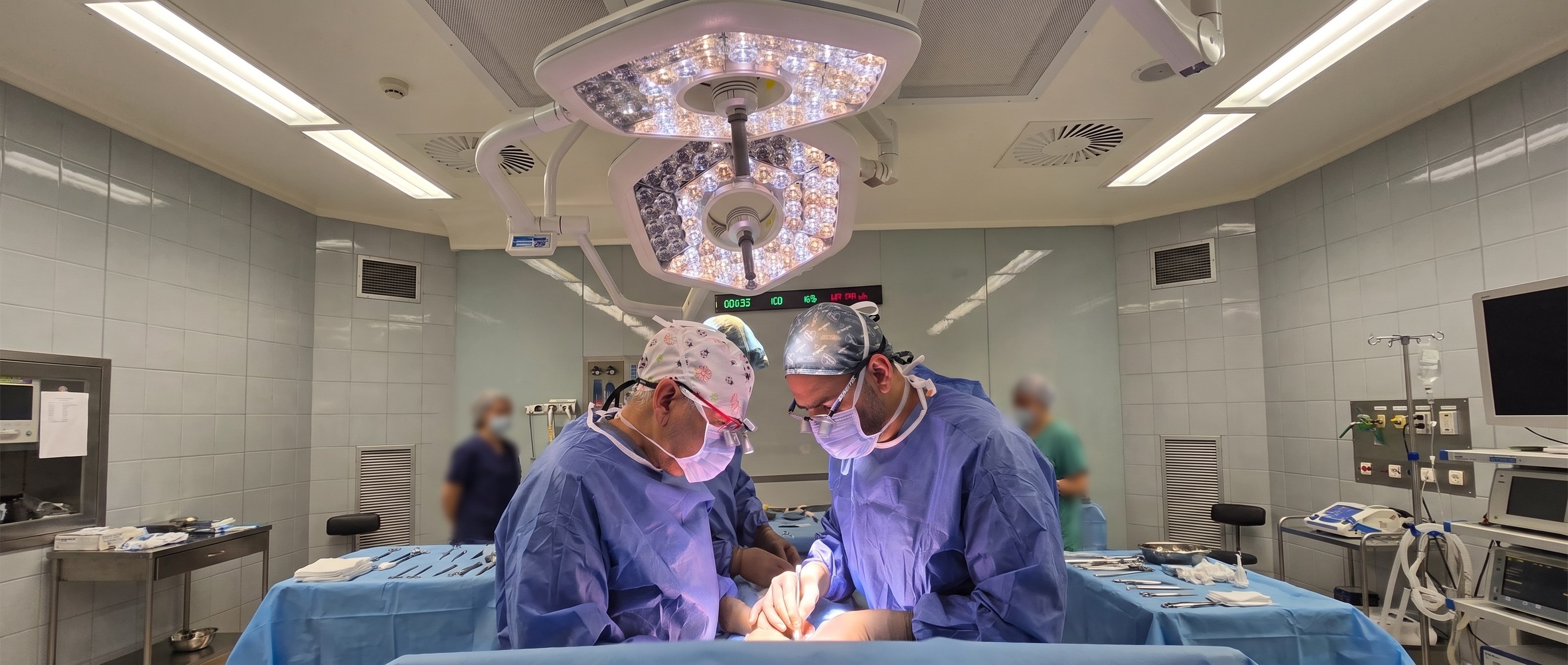
Two pediatric urology specialists work together on every operation: one performs the repair while the other assists, checks, and takes over when needed.
This built-in second opinion completes demanding operations with less risk.
Lower risk
A shared assessment and four-handed technique; a second experienced pair of eyes at the demanding steps.
Shorter surgery
Working in parallel shortens the time spent under anesthesia.
Less anesthesia
Infants and young children spend less time under anesthesia.
Prof. Dr. Ali Avanoğlu
Pediatric Surgeon and Pediatric Urologist
Over forty years in medicine, thirty-two of them as a pediatric surgeon; focused exclusively on pediatric urology since 1994. Associate professor in 1996 and full professor in 2002 at Ege University, where he chaired both the Department of Pediatric Surgery and the Division of Pediatric Urology. Roughly 3,000 hypospadias repairs and more than 1,000 operations for vesicoureteral reflux.
Graduate of Ege University Faculty of Medicine (2006); completed urology training at İzmir Atatürk Training and Research Hospital (2011) and a pediatric urology fellowship at Ondokuz May University (2016); associate professor since 2022. Has worked at Gaziantep Children's Hospital, İzmir Çiğli Training and Research Hospital, and Bakırçay University. More than 1,000 hypospadias repairs and a comparable number of stone operations; continues the same patients' follow-up from childhood through adolescence and adulthood, in the same team.
In every operation, it is not a surgeon and an assisting resident — it is two specialists who both know the procedure, working together.
We summarize the difference in four points.
Difference 01
Critical decisions are made together
Which technique to use, whether the repair will finish in one session, and how to respond to anything unexpected during surgery are decided by two specialists' shared assessment — never by one person alone.
Shared decision
2×
Two pediatric urology surgeons
Together, in the same team, every time
Difference 02
Shorter time under anesthesia
While one surgeon finishes a step, the other prepares the next; four hands work at once. In an infant or young child, every extra minute under anesthesia is a risk in its own right.
Two hands, at the same time
Difference 03Related conditions, same session
1×
One anesthesia: conditions found together (undescended testis, inguinal hernia, hydrocele, hydronephrosis) are planned into the same session.
Some issues only surface during adolescence or adulthood. Because the team includes both pediatric and adult urology, follow-up never breaks off between childhood and adulthood.
Pediatric urology
Adult urology
Same team, same record
Process · for patients travelling from abroad too
Travelling to Turkeyfor treatment?
Surgery takes place at İzmir Acıbadem Kent Hospital; our clinic is about 4–5 km from the hospital, with a range of accommodation options nearby.
The process runs in coordination between the clinic and the hospital, from your first consultation through to the completion of post-operative checks.
ClinicHospitalİzmir Acıbadem Kent Hospital · about 4–5 km.
01Clinic
Consultation and surgical planning
Patients are first assessed at our clinic; surgical planning is done here.
Avanoğlu–Issı Clinic
02Hospital
Pre-operative tests and anesthesia review
One day before surgery, you are referred to İzmir Acıbadem Kent Hospital for the required tests and anesthesia assessment.
One day before surgery
03Hospital
Surgery
The operation takes place the next day, as planned. In suitable cases, it is completed as day surgery.
İzmir Acıbadem Kent Hospital
04Clinic
Recovery after discharge
After the observation period, patients who meet discharge criteria continue recovering at home or at their accommodation. Dressing changes, wound checks, and catheter checks and removal continue at our clinic.
Avanoğlu–Issı Clinic
Frequently asked by families
What families travelling from abroad ask first
Short answers are below; write to us directly with any question about your trip.
Surgery takes place at İzmir Acıbadem Kent Hospital. Our clinic is about 4–5 km from the hospital, with a range of accommodation options nearby.
How does the process work, from consultation to surgery?
You are first assessed at our clinic, where the surgical plan is made. One day before surgery you are referred to the hospital for the required tests and anesthesia review; the operation itself takes place the following day, as planned.
Do we stay in hospital after surgery?
A significant share of our operations, when suitable, are completed as day surgery. Patients who meet discharge criteria continue recovering, after the observation period, in the more comfortable setting of your home or accommodation.
How are post-discharge checks handled?
Follow-up steps such as dressing changes, wound checks, and catheter checks and removal continue to take place at our clinic. That way, the entire process — from the first consultation through to the completion of follow-up — runs in coordination between the clinic and the hospital.
Contact us
With the hypospadias assessment that fits your situation would you like to reach the doctor?
There are two ways. If you'd like the doctor to already know your situation before replying, start with the short assessment; if your question is brief, write to us directly. Both reach the same team.
2I'll write directlyFill in the form; your message opens ready-made in WhatsApp (you can edit it before sending), or you can send it directly by email. This page's topic is added to the message automatically.
Editor's note: Age and a short sentence are enough; you don't need to use medical terms. Please don't send photos — the doctor will request them through a secure channel if needed. What you write is only sent when you submit it; this page does not store anything.