Post-Circumcision Care: The Healing Process for a Diapered Baby and Child
Once you're home after the circumcision, your job is simple: keep the area dry, change diapers often, and know what to expect. This post walks through daily care for a diapered baby and an older child, the stages of healing, and the signs that mean you should call the doctor.
Once you're home after the circumcision, two questions come up first: is this how it's supposed to look, and how many days does circumcision take to heal? This post answers both, in order.
Below you'll find post-circumcision care laid out not day by day, but stage by stage: the first day, dressing changes, diaper changes, bathing, cream, pain, and sleep. We've covered the differences between a diapered baby and an older child separately.
Most of the healing happens on its own; the family's job is to keep the area dry, clean, and comfortable. We've also grouped the expected appearances, the signs that call for same-day medical attention, and the common mistakes under their own headings.
01
The First Day After Circumcision: What to Do Once You're Home
On the first day, there are three things to do: change the dressing the way your doctor described, watch whether your child urinates, and ease the pain with the medication your doctor recommended. The rest is waiting.
When you pick your baby up, avoid pressing on the area. Fasten the diaper loosely and choose loose clothing. Post-circumcision care is simpler in the first hours than it looks; the real skill is knowing what to expect.
The First Day's Measure Is Simple
If the child is settling down, able to sleep, and urinating, healing is on track. It's expected for the wound to look red and shiny in the first few days.
When Is the Dressing Removed?
The dressing is renewed at every diaper change and applied with the lubricating ointment your doctor recommends, so it doesn't stick to the skin. How many days the dressing continues is something the doctor who performed the circumcision will tell you; practice varies from clinic to clinic.
If the dressing has stuck to the skin, don't pull it off by force. Wet it with warm water and wait a few minutes; once it softens, it loosens on its own. If it still resists, stop trying to remove it and ask your doctor.
When Is the First Urination Expected?
The first urination after the procedure is expected within about six to eight hours. In babies, you'll notice this from the diaper getting wet. In an older child, the first time may sting a little, so the child may want to put it off.
A warm bath, or the sound of running water from a tap, can make urinating easier. If no urination happens at all during this time, don't wait: call your doctor the same day.
02
How Many Days Does Circumcision Take to Heal? The Healing Process and Its Stages
Published family guidance reports that the circumcision wound in babies heals in about a week to ten days. This is an average, not a calendar.
Three things change this timeline: the circumcision method, the child's age, and whether the child is still in diapers. In a diapered baby, the final stage can take a bit longer because the area stays moist throughout the day. In a school-age child, a stitched circumcision means a larger wound.
For that reason, giving a chart along the lines of 'on the seventh day, this happens' wouldn't be accurate. The diagram below shows not a day count but the expected direction of progress; the timeline that applies to your child is the one your doctor gives you.
How Many Days Does a Stitched Circumcision Take to Heal, and When Do the Stitches Fall Out?
The stitches used in a stitched circumcision dissolve on their own; they don't need to be removed. Dissolving begins in about seven to ten days, and completing the process can take one to three weeks.
During this time, you may see small stitch ends in the diaper or underwear. This is an expected finding; don't pull on the ends. After the wound surface closes, the color and texture of the skin edge keep settling for a few more weeks.
How the Course Differs with the Ring (Clamp) Method
In the ring method, a plastic ring is used instead of stitches. The ring falls off on its own in about five to eight days; it shouldn't be pulled by hand, twisted, or fiddled with around its edges.
Until the ring falls off, keeping the area dry is enough. If the ring goes past eight days, slips out of place, or swelling increases underneath it, have your doctor take a look.
circumcision healing process
03
Swelling, Bruising, Crusting, and a Yellow Film: Which Appearance Is Normal?
The appearance after circumcision changes quickly in the first few days, and most of these changes are healing itself. The four findings families ask about most are: swelling, bruising, crusting, and the yellow-white film on the head of the penis.
The Appearance Can Be Alarming at First
A red, shiny, yellowish surface is the normal look of a healing wound. The measure comes down to one question: are things looking a little better each day, or a little worse?
What You See → Is It Expected → What to Do
What You See
Is It Expected
What to Do
The head of the penis is red and shiny
Yes; this is the wound's own appearance in the first few days.
Keep the area dry and apply the ointment as your doctor prescribed.
A thin yellowish layer
Yes; expected during the first week, not infection.
Don't wipe it off or scrape it.
Mild swelling and a purplish color
Yes; can last up to a week and gradually decreases.
Keep watching; if swelling increases, have your doctor take a look.
A few drops of blood in the diaper
Yes; expected in the first few days.
If the stain grows, call your doctor the same day.
The dressing has stuck to the skin
Common.
Soften it with warm water; don't pull it off.
Redness increasing after the third day, with a bad smell
No; suggests infection.
Call your doctor the same day.
The child hasn't urinated at all for six to eight hours
No; this isn't expected.
Call your doctor the same day.
How Long Do Swelling and Bruising Last After Circumcision?
Swelling is an expected finding. Mild swelling and a purplish color change can last up to a week before subsiding on its own. It's also normal for the swelling to increase and decrease a bit over the course of a day.
The distinction is this: expected swelling gradually decreases. Rapidly increasing swelling, darkening color, and pain that becomes more pronounced with touch don't fit the expected course; this picture shouldn't be left waiting.
Crusting and a Yellow Layer After Circumcision Are Not Infection
Seeing a thin yellowish layer on the head of the penis during the first week is part of healing. Families often mistake it for infection; in fact, it's the covering of the newly forming surface. It shouldn't be wiped off, scraped, or scrubbed with soap.
The same is true for the crusting at the wound edge: the crust falls off on its own and shouldn't be picked off. If yellow discharge lasts longer than a week, smells bad, or increases along with redness, it needs to be evaluated.
04
Care for a Diapered Baby: Diaper Changes and Contact with Urine
For a diapered baby, there's one particular challenge: the healing surface stays in a moist environment for much of the day. Post-circumcision care in diapered babies is entirely built around reducing that moisture.
How Often Should the Diaper Be Changed, and How Should It Be Fastened?
Change the diaper every time it gets wet. Leaving a wet diaper on slows healing and causes diaper rash; changing it once overnight as well is enough for most families.
Fasten the diaper loosely; a tight diaper means friction. When you lay the baby on their back, having the penis point upward reduces friction against the front of the diaper.
Does Urine Harm the Wound, and What Should You Do About Diaper Rash?
Urine touching the wound doesn't disrupt healing. The problem isn't the urine itself, it's staying moist for a long time. At each diaper change, rinsing the area with warm water and pat-drying it is enough.
If there's widespread redness across the diaper area, this is usually diaper rash, a separate issue from the circumcision wound. Ask your doctor whether you can use a diaper rash cream; they'll also tell you whether it's all right for the cream to touch the wound.
05
How Many Days After Circumcision Can You Bathe?
In most children, the first day or two involve a sponge bath — no sitting in the tub, no soaking the area in water — after which the usual bathing routine resumes. Your doctor will tell you the exact timing, since the method and the size of the wound vary from child to child.
How to Bathe: Water, Soap, and Drying
Don't rub the area. Let warm water trickle over it from your palm or a cloth and let it run off on its own. Soap, shampoo, cologne, and wet wipes should never be applied directly to the wound.
Don't rub when drying; pat it dry with a soft towel. Applying the ointment your doctor recommends after the bath makes it less likely that the dressing will stick to the skin.
When Can the Child Go in the Pool or the Sea?
The pool and the sea are put off until the wound has fully closed.
Whether the wound has closed is a call your doctor makes, not you; you can ask at the follow-up visit. Sand, seawater, and pool chemicals can irritate freshly closed skin.
06
What Cream Is Used After Circumcision, and How Is the Dressing Done?
There's only one correct answer to this question: your doctor decides on the cream. Some of the ointments used after circumcision are just there to prevent sticking, while others are chosen based on infection risk.
This post deliberately doesn't list drug names or doses. Don't pick up a cream at the pharmacy on your own and start using it, and don't use a cream prescribed for another child.
Less Cream, Applied Correctly
In circumcision care, more cream doesn't mean faster healing. A thin layer and regular diaper changes do a better job than a generous amount of ointment.
Where and How Do You Apply the Cream?
The ointment is applied, the way your doctor showed you, as a thin layer along the wound line and on the surface of the dressing that touches the skin. Apply it thinly, without pressing or spreading it thick.
Most families time the application to coincide with diaper changes. Your doctor will tell you how many days it should continue; don't extend it or stop early on your own.
07
Pain, Sleep, Clothing, and Play: Keeping the Child Comfortable
Post-circumcision pain is short-lived in most children and easy to manage. The measure of pain is simple: a child who plays, moves around, and can sleep is a comfortable child.
How Many Days Does Circumcision Pain Last?
Noticeable pain occurs in most children within the first six to eight hours; in some, mild discomfort continues for a few days. Give the pain reliever with the medication and at the intervals your doctor recommends.
Pain that doesn't ease despite the pain reliever, or that keeps increasing, doesn't fit the expected course. In that case, the answer isn't more medication — it's having the child evaluated.
Clothing, Sleep, and Play Routine
Choose loose, soft clothing; in an older child, roomy pajama bottoms reduce friction. Avoid pressing on the area when carrying the child.
It's expected for the sleep schedule to be disrupted for a few days. Ride-on toys — bicycles, rocking horses, slides — and vigorous play are put off for about two weeks. Your doctor will tell you when to return to daycare and school.
08
When Should You See a Doctor? Signs of Bleeding, Fever, and Infection
Serious problems after circumcision are rare; the two most common are bleeding and infection. Both are easy to manage when caught early, so it's enough to know the signs below.
A few drops of blood in the diaper, or a small stain, is expected in the first few days. The measure is this: has the ooze stopped, and is the stain growing?
The diaper staying completely dry even after about six to eight hours have passed (inability to urinate)
Bleeding that won't stop, or a stain in the diaper that keeps growing beyond a few drops
A fever of 38 °C (100.4 °F) or higher
Redness increasing after the third to fifth day, or spreading toward the abdomen
Discharge that looks like infection, along with a bad smell
Yellow discharge that lasts longer than a week
Rapidly increasing swelling and darkening color
Pain that doesn't ease with pain relievers and keeps increasing
Seeking Help Early Makes Things Easier
None of these signs are common. Still, if you notice one, don't wait; bleeding and infection that are caught early are usually resolved with simple measures. If it's nighttime or the weekend, go to the nearest emergency department.
09
Common Misconceptions: Powder, Soap, Forced Cleaning, and Folk Remedies
In circumcision care, the most common harm comes from well-intentioned extra measures. None of the following speed up healing.
Most of the methods circulating on parenting forums are on this list.
Powder and talc: trap moisture and carry a respiratory risk for the baby.
Soap, cologne, wet wipes: irritate the new surface; plain warm water is enough.
Scraping off the crust or the yellow film: reopens the newly closed surface.
Forcibly pulling the skin back: causes pain, bleeding, and a new wound surface.
Herbal oils, poultices, ash, and pastes: have no proven benefit and increase infection risk.
Homemade protectors: paper cups slipped over the penis and similar contraptions put pressure on it; don't use anything other than the device your doctor gives you.
Ask Instead of Trying It Yourself
Instead of trying a method at home, ask about it at the follow-up visit; it's faster and safer.
10
Conditions Often Mistaken for Normal Healing
Not every change noticed after circumcision is part of healing. The three conditions below are often mixed up with everyday aftercare; each one calls for a different response.
If, once the swelling has gone down, the skin folds back over the head of the penis and stays there, this points to post-circumcision adhesion. This is a mechanical sticking together, it's painless, and in most children it separates on its own over time. Daily care doesn't change either: keeping the area dry and gently sliding the skin back at diaper changes is enough.
If redness, swelling, pain, and discharge appear together, this points to inflammation of the penis tip (balanitis). The cause of this picture isn't a lack of care but the inflammation itself; it needs an examination.
If what's changing isn't the appearance but the way the child urinates — the stream has thinned, sprays upward, or the child is straining — this points to narrowing of the urinary opening (meatal stenosis). This is a later problem; it isn't something that shows up in the first few days.
In children with hypospadias, congenital penile curvature, or a buried appearance, guidelines don't recommend simple circumcision; the foreskin is preserved because it may be needed for the repair. This is why the decision about circumcision in hypospadias is made before the circumcision.
The information in this post was prepared based on American Academy of Pediatrics (AAP) family guidance, children's hospitals' discharge instructions, and the circumcision section of the EAU/ESPU pediatric urology guidelines.
In short: healing takes about a week to ten days in babies. Redness, mild swelling, and a yellow film are expected appearances. Diapers are changed often, bathing returns to its usual routine within a few days, and what needs doing at home is small and simple. Bleeding that won't stop, fever, increasing redness, and an inability to urinate call for same-day medical attention. From diagnosis through follow-up, the process is handled together by two pediatric urology specialists.
You can see the steps to follow based on your child's findings by starting with the Road Map, and book an appointment for an evaluation.
In babies, it's reported as about a week to ten days. This is an average; the circumcision method, the child's age, and whether they're still in diapers all affect the timeline. The doctor who performed the circumcision will tell you the timeline that applies to your child.
When do the stitches fall out after a stitched circumcision?
The stitches dissolve on their own and don't need to be removed. Dissolving begins in about seven to ten days; complete dissolving can take one to three weeks. Small stitch ends seen in the diaper or underwear are an expected finding and shouldn't be pulled.
How many days after circumcision can you bathe?
In most children, the first day or two involve a sponge bath without sitting in the tub, after which the usual bathing routine resumes. The area isn't rubbed; warm water is let to trickle over it and it's pat-dried. Your doctor will tell you the exact timing.
Is swelling after circumcision normal, and how many days does it last?
Yes, mild swelling and a purplish color change are expected findings and can last up to a week. Expected swelling gradually decreases. Rapidly increasing swelling, darkening color, and increasing pain don't fit the expected course; in that case, seek care the same day.
Is bleeding after circumcision normal?
A few drops of blood in the diaper or a small stain is expected in the first few days. Ooze that doesn't stop, or a stain that keeps growing, isn't expected; if you notice either of these, call your doctor the same day.
How many hours after circumcision does urination happen?
The first urination is expected within about six to eight hours. In babies, you'll notice this from the diaper getting wet. If no urination happens at all during this time, don't wait — call your doctor the same day.
What cream is used after circumcision?
Your doctor decides on the cream; this post deliberately doesn't list drug names or doses. Some of the ointments used just prevent the dressing from sticking, while others are chosen based on infection risk. Don't pick up a cream at the pharmacy on your own and start using it.
How is the circumcision dressing done, and when is the bandage removed?
The dressing is renewed at every diaper change and applied with the ointment your doctor recommends so it doesn't stick to the skin. The doctor who performed the circumcision will tell you how many days it continues. If the dressing has stuck, don't pull it off by force; wet it with warm water and wait a few minutes.
Are crusting and a yellow layer after circumcision a sign of infection?
No. The thin yellowish layer seen on the head of the penis during the first week, and the crust at the wound edge, are part of healing; they shouldn't be wiped off or scraped. If yellow discharge lasts longer than a week, smells, or increases along with redness, it needs to be evaluated.
How many days does circumcision pain last?
Noticeable pain occurs in most children within the first six to eight hours; in some, mild discomfort continues for a few days. Give the pain reliever with the medication and at the intervals your doctor recommends. A child who plays, moves around, and can sleep is considered comfortable.
Does fever occur after circumcision?
Circumcision by itself doesn't cause fever. A fever of 38 °C (100.4 °F) or higher, especially together with redness, foul-smelling discharge, or fussiness, needs to be evaluated. In that case, call your doctor the same day.
How often should I change the diaper?
Change the diaper every time it gets wet and fasten it loosely. Leaving a wet diaper on slows healing and causes diaper rash. At each diaper change, rinsing the area with warm water and pat-drying it is enough.
When can you go in the sea and the pool after circumcision?
Neither is allowed until the wound has fully closed. Sand, seawater, and pool chemicals can irritate freshly closed skin. Your doctor decides whether the wound has closed; you can ask at the follow-up visit.
How can you tell if there's an infection after circumcision?
Redness increasing after the third to fifth day or spreading toward the abdomen, discharge that looks like infection, a bad smell, and fever all suggest infection. These signs are rare; if you notice one, call your doctor the same day.
When does the child return to daycare and school, and when can play resume?
Ride-on toys and vigorous play are put off for about two weeks. Your doctor will tell you when to return to daycare and school; this depends on the circumcision method and the child's comfort.
Our surgeons · two specialists, one team
One operation,two surgeons
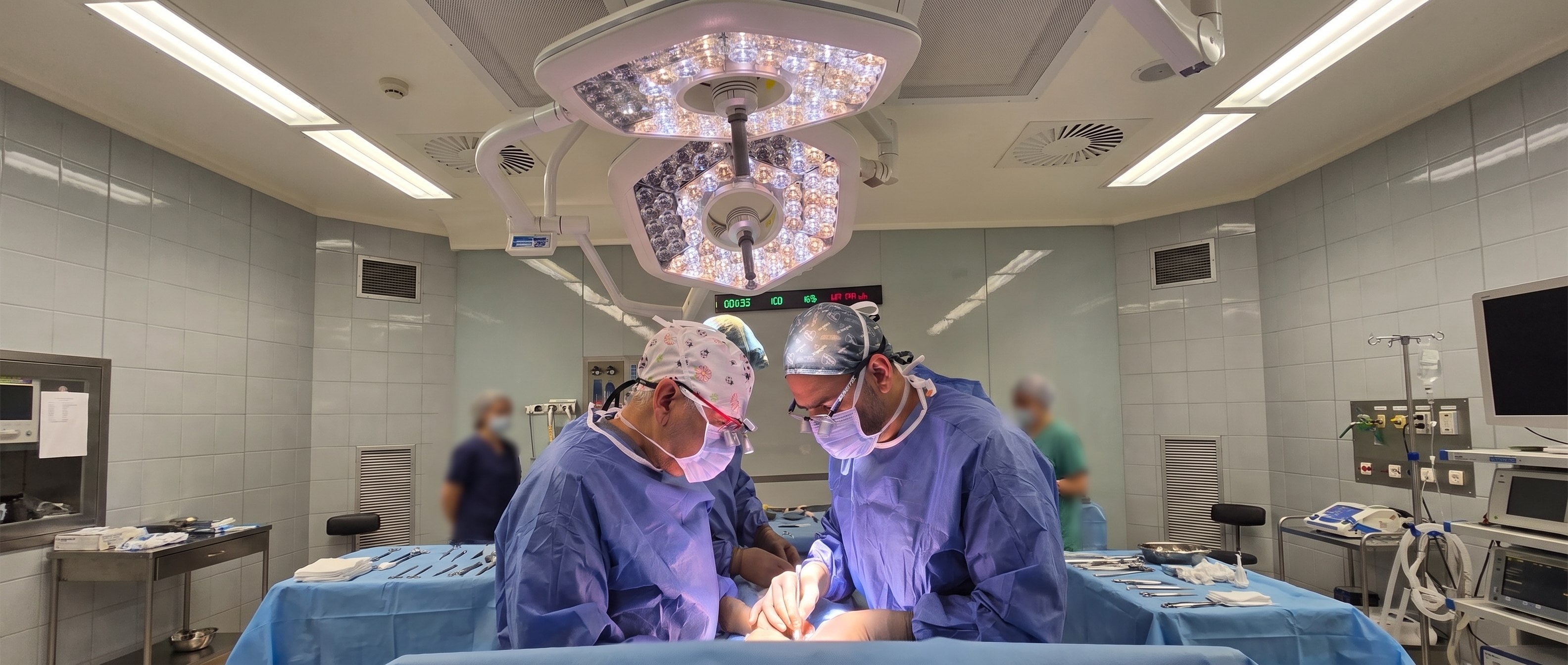
Two pediatric urology specialists work together on every operation: one performs the repair while the other assists, checks, and takes over when needed.
This built-in second opinion completes demanding operations with less risk.
Lower risk
A shared assessment and four-handed technique; a second experienced pair of eyes at the demanding steps.
Shorter surgery
Working in parallel shortens the time spent under anesthesia.
Less anesthesia
Infants and young children spend less time under anesthesia.
Prof. Dr. Ali Avanoğlu
Pediatric Surgeon and Pediatric Urologist
Over forty years in medicine, thirty-two of them as a pediatric surgeon; focused exclusively on pediatric urology since 1994. Associate professor in 1996 and full professor in 2002 at Ege University, where he chaired both the Department of Pediatric Surgery and the Division of Pediatric Urology. Roughly 3,000 hypospadias repairs and more than 1,000 operations for vesicoureteral reflux.
Graduate of Ege University Faculty of Medicine (2006); completed urology training at İzmir Atatürk Training and Research Hospital (2011) and a pediatric urology fellowship at Ondokuz May University (2016); associate professor since 2022. Has worked at Gaziantep Children's Hospital, İzmir Çiğli Training and Research Hospital, and Bakırçay University. More than 1,000 hypospadias repairs and a comparable number of stone operations; continues the same patients' follow-up from childhood through adolescence and adulthood, in the same team.
In every operation, it is not a surgeon and an assisting resident — it is two specialists who both know the procedure, working together.
We summarize the difference in four points.
Difference 01
Critical decisions are made together
Which technique to use, whether the repair will finish in one session, and how to respond to anything unexpected during surgery are decided by two specialists' shared assessment — never by one person alone.
Shared decision
2×
Two pediatric urology surgeons
Together, in the same team, every time
Difference 02
Shorter time under anesthesia
While one surgeon finishes a step, the other prepares the next; four hands work at once. In an infant or young child, every extra minute under anesthesia is a risk in its own right.
Two hands, at the same time
Difference 03Related conditions, same session
1×
One anesthesia: conditions found together (undescended testis, inguinal hernia, hydrocele, hydronephrosis) are planned into the same session.
Some issues only surface during adolescence or adulthood. Because the team includes both pediatric and adult urology, follow-up never breaks off between childhood and adulthood.
Pediatric urology
Adult urology
Same team, same record
Process · for patients travelling from abroad too
Travelling to Turkeyfor treatment?
Surgery takes place at İzmir Acıbadem Kent Hospital; our clinic is about 4–5 km from the hospital, with a range of accommodation options nearby.
The process runs in coordination between the clinic and the hospital, from your first consultation through to the completion of post-operative checks.
ClinicHospitalİzmir Acıbadem Kent Hospital · about 4–5 km.
01Clinic
Consultation and surgical planning
Patients are first assessed at our clinic; surgical planning is done here.
Avanoğlu–Issı Clinic
02Hospital
Pre-operative tests and anesthesia review
One day before surgery, you are referred to İzmir Acıbadem Kent Hospital for the required tests and anesthesia assessment.
One day before surgery
03Hospital
Surgery
The operation takes place the next day, as planned. In suitable cases, it is completed as day surgery.
İzmir Acıbadem Kent Hospital
04Clinic
Recovery after discharge
After the observation period, patients who meet discharge criteria continue recovering at home or at their accommodation. Dressing changes, wound checks, and catheter checks and removal continue at our clinic.
Avanoğlu–Issı Clinic
Frequently asked by families
What families travelling from abroad ask first
Short answers are below; write to us directly with any question about your trip.
Surgery takes place at İzmir Acıbadem Kent Hospital. Our clinic is about 4–5 km from the hospital, with a range of accommodation options nearby.
How does the process work, from consultation to surgery?
You are first assessed at our clinic, where the surgical plan is made. One day before surgery you are referred to the hospital for the required tests and anesthesia review; the operation itself takes place the following day, as planned.
Do we stay in hospital after surgery?
A significant share of our operations, when suitable, are completed as day surgery. Patients who meet discharge criteria continue recovering, after the observation period, in the more comfortable setting of your home or accommodation.
How are post-discharge checks handled?
Follow-up steps such as dressing changes, wound checks, and catheter checks and removal continue to take place at our clinic. That way, the entire process — from the first consultation through to the completion of follow-up — runs in coordination between the clinic and the hospital.
Contact us
With the hypospadias assessment that fits your situation would you like to reach the doctor?
There are two ways. If you'd like the doctor to already know your situation before replying, start with the short assessment; if your question is brief, write to us directly. Both reach the same team.
2I'll write directlyFill in the form; your message opens ready-made in WhatsApp (you can edit it before sending), or you can send it directly by email. This page's topic is added to the message automatically.
Editor's note: Age and a short sentence are enough; you don't need to use medical terms. Please don't send photos — the doctor will request them through a secure channel if needed. What you write is only sent when you submit it; this page does not store anything.